How to Watch a Meteor Shower: The Ultimate Stargazing & Peak Viewing Guide
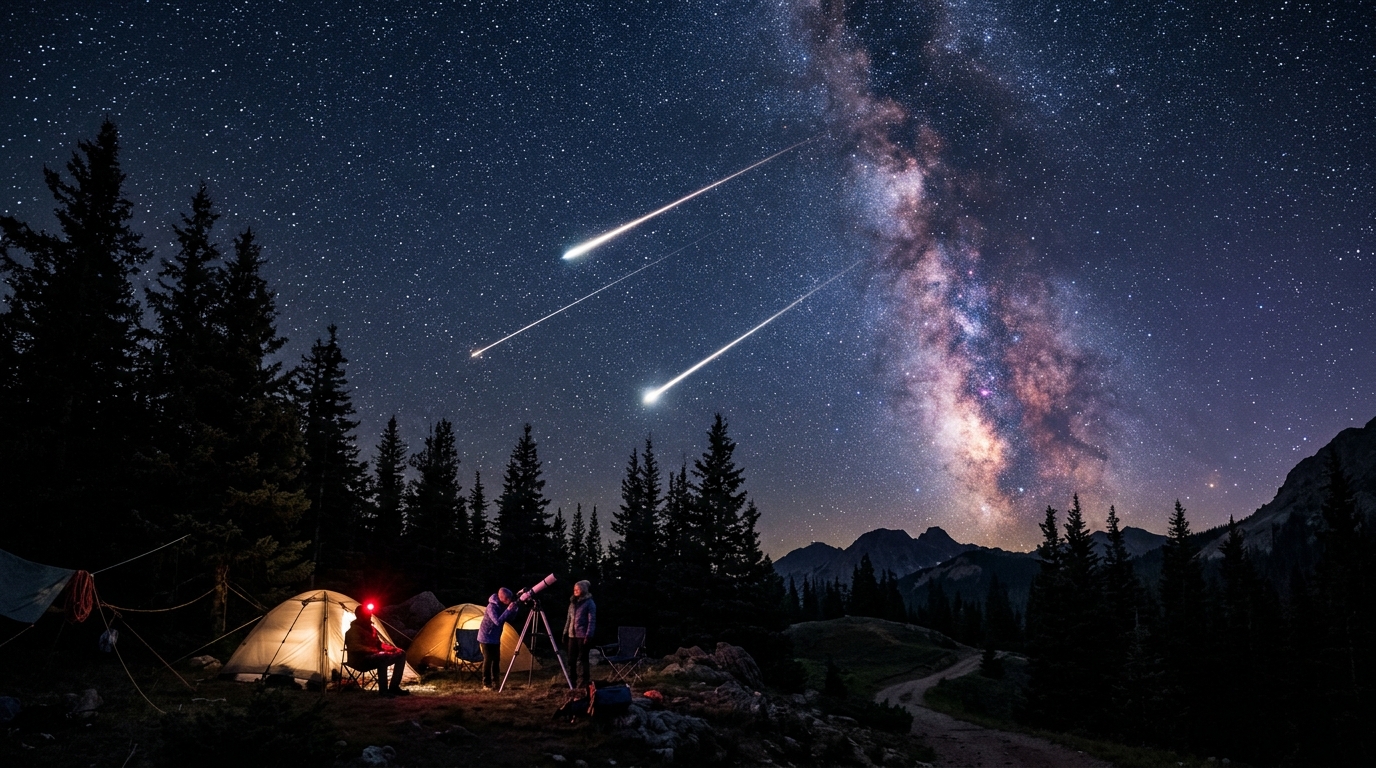
Few night sky experiences match the sudden rush of a bright meteor blazing across a crystalline sky. Whether observing from a quiet mountain ridge or lounging in your backyard, watching a meteor shower is one of the most rewarding events in astronomy. You don't need expensive telescopes or optical equipment—in fact, magnification gears actually work against you when hunting for shooting stars.
However, stepping outside for five minutes and expecting an instant fireworks display often leads to disappointment. Successfully catching dozens of bright meteors requires understanding peak activity windows, radiant points, dark adaptation, and environmental conditions. This comprehensive meteor shower viewing guide covers everything you need to transform an ordinary night into an unforgettable stargazing session.
✦ Quick Answer: How to Watch a Meteor Shower in 4 Steps
- Pick the Peak Night: Observe during the shower's peak date, specifically between midnight and 4:30 AM when your hemisphere faces forward into the cosmic debris stream.
- Ditch the Optics: Use only your naked eyes. Telescopes and binoculars restrict your field of view to a tiny circle, causing you to miss meteors across the wider sky.
- Find Dark Skies: Move away from city light pollution, and allow your eyes 20 to 30 full minutes to adapt to darkness without looking at phone screens.
- Look 45 Degrees Away from the Radiant: While meteors appear to originate from a specific constellation, the longest streaks appear 45 to 90 degrees away from the radiant point.
What Causes a Meteor Shower? (Comet Dust & Orbital Intersections)
To pinpoint the best time to see shooting stars, it helps to understand what a meteor actually is. As comets and active asteroids orbit the Sun, solar radiation boils off volatile ices, shedding clouds of dust and rocky grit along their paths. Over centuries, these trails spread out into cosmic debris streams spanning millions of miles.
Each year, Earth's orbit passes through these dense debris streams at predictable dates. When a tiny grain of comet dust strikes Earth's upper atmosphere at speeds between 25,000 and 160,000 miles per hour, intense friction superheats the surrounding air. The atmospheric gas glows incandescently for a split second, creating the streak of light we call a meteor.
You can visualize these orbital intersections directly inside our interactive 3D Solar System Explorer, where you can inspect how elliptical comet trajectories cross Earth's orbital plane.

Meteors vs. Meteoroids vs. Meteorites: The Quick Distinction
Astronomers classify space debris into three distinct stages:
- Meteoroid: The physical chunk of rock or dust while traveling through interplanetary space.
- Meteor: The bright streak generated when a meteoroid vaporizes in Earth's mesosphere (roughly 50 to 75 miles high).
- Meteorite: A rare, larger fragment that survives atmospheric entry and lands intact on Earth's surface.
For detailed planetary data on space debris, visit the official NASA Science Solar System & Meteoroids Portal.
Major Annual Meteor Showers: Calendar, Peak Dates & Hourly Rates
While sporadic meteors occur on any clear night, major annual showers provide predictable peaks with elevated hourly activity. Activity is measured by the Zenithal Hourly Rate (ZHR): the theoretical number of meteors a single observer would see under ideal, pitch-black skies with the radiant point directly overhead.
| Meteor Shower | Active Window | Peak Date | Parent Body | Typical Peak ZHR |
|---|---|---|---|---|
| Quadrantids | Dec 28 - Jan 12 | Jan 3 - 4 | Asteroid 2003 EH1 | 80 - 120 |
| Lyrids | Apr 14 - Apr 30 | Apr 21 - 22 | Comet C/1861 G1 (Thatcher) | 15 - 20 |
| Eta Aquariids | Apr 19 - May 28 | May 5 - 6 | 1P/Halley (Halley's Comet) | 40 - 60 |
| Perseids | Jul 17 - Aug 24 | Aug 11 - 13 | Comet 109P/Swift-Tuttle | 90 - 110 |
| Orionids | Oct 2 - Nov 7 | Oct 21 - 22 | 1P/Halley (Halley's Comet) | 20 - 25 |
| Leonids | Nov 6 - Nov 30 | Nov 17 - 18 | Comet 55P/Tempel-Tuttle | 15 - 20 |
| Geminids | Dec 4 - Dec 20 | Dec 13 - 14 | Asteroid 3200 Phaethon | 120 - 150 |
| Ursids | Dec 17 - Dec 26 | Dec 21 - 22 | Comet 8P/Tuttle | 10 - 15 |
You can check updated celestial events, conjunctions, and upcoming sky viewing conditions on our live Astronomical Calendar, which tracks seasonal sky phenomena and planetary alignments throughout the year.
Understanding the Radiant Point (Why You Shouldn't Stare Directly at It)
Each meteor shower is named after the constellation from which its streaks appear to radiate. For example, the Perseids appear to emanate from Perseus, while the Geminids radiate from Gemini. This origin point in the sky is called the radiant.
The radiant is an optical perspective effect, identical to how parallel railroad tracks appear to converge toward a single vanishing point in the distance. Because all debris particles within a comet's stream travel in parallel trajectories at identical velocities, tracing their atmospheric trails backward points toward the exact same celestial coordinate.
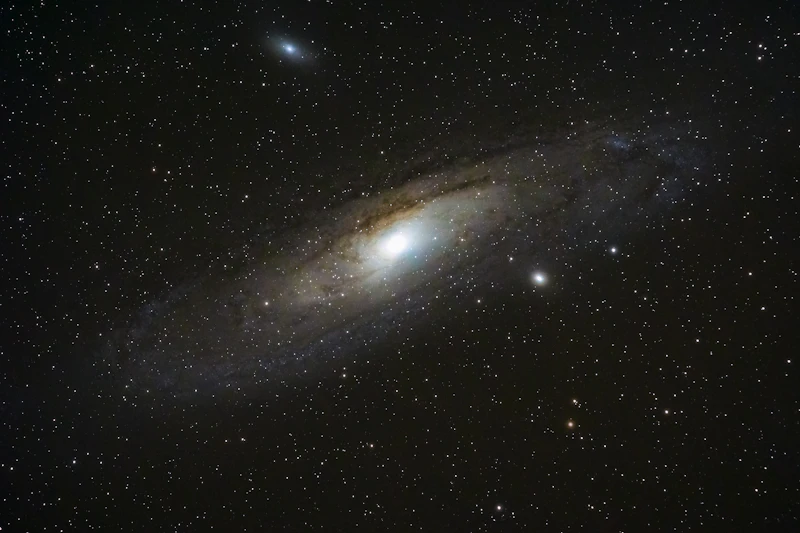
Pro-Observer Rule: Never stare directly at the radiant point. Meteors near the radiant enter the atmosphere heading almost directly toward you, producing short, stubby streaks. To catch long, dramatic fireballs with glowing smoke trails, aim your gaze 45 to 90 degrees away from the radiant toward the darkest quadrant of your sky.
Why Telescopes and Binoculars Hinder Meteor Watching
One common beginner mistake is bringing a telescope or binoculars to a meteor watch. While telescopes are essential for observing lunar craters, Saturn's rings, or distant nebulae, they are counterproductive for meteor showers.
Meteors appear unpredictably across hundreds of square degrees of sky in fractions of a second. A typical telescope eyepiece has a field of view under one degree. Looking for meteors through a telescope is like trying to catch falling autumn leaves through a drinking straw. Your naked eyes provide a wide 120-degree panoramic view, ideal for catching rapid movement across your peripheral vision.
If you want to view deep space nebulae or high-resolution planetary structures before your meteor session begins, explore our curated NASA Space Photo Gallery for clear APOD imagery and deep space photography.
7 Practical Stargazing Tips for Maximum Shooting Stars
Follow these seven field-tested practices to maximize your shooting star count:
1. The 2:00 AM Sweet Spot (The Windshield Effect)
While some meteors can be seen once twilight ends, rates increase dramatically after midnight and peak between 2:00 AM and dawn due to Earth's axial rotation.
Before midnight, your location is on the trailing side of Earth, meaning incoming debris must catch up from behind. After midnight, your location rotates into the leading hemisphere—facing forward into Earth's orbital trajectory. Just like more raindrops hit a car's front windshield than its rear window, Earth plunges headfirst into the comet stream in the pre-dawn hours, producing faster, brighter, and more frequent meteors.
2. Check the Lunar Phase and Moonrise Schedule
The Moon is the greatest natural source of sky light pollution. A bright Full Moon washes out faint streaks, reducing observable counts by up to 70%. Target nights during a New Moon or when the Moon sets before midnight. If a bright moon is up, orient yourself so a building or tree blocks direct moonlight from your field of view. Learn how lunar cycles and atmospheric scattering interact in our guide on Lunar Eclipse Science and the Blood Moon Effect.
3. Escape the Urban Light Dome
Urban glow severely diminishes visibility. In a suburban backyard (Bortle Class 6 to 7), you might see 10 to 15 meteors per hour during a peak Perseid night. Under a pristine dark sky (Bortle Class 2 to 3), you can easily count 60 to 90 meteors per hour. Check DarkSky International to find certified Dark Sky Parks near you.
4. Protect Your Night Vision with Red Light
It takes your eyes 20 to 30 minutes in total darkness to produce rhodopsin, the compound enabling night vision. A single glance at a white smartphone screen instantly bleaches rhodopsin, resetting the adaptation clock. Use a red-LED flashlight or red tape over a standard light to preserve night vision.
5. Recline Fully to Prevent Neck Strain
Sitting upright causes neck fatigue within 20 minutes. Use a zero-gravity reclining lawn chair, an inflatable sleeping pad, or a blanket spread across the ground. Lying back lets you comfortably scan the entire celestial canopy.
6. Practice Wide Scanning and Averted Vision
Retinal rod cells detect motion and faint light on the periphery of your eye. When scanning, keep your gaze relaxed rather than staring at a fixed point. Looking slightly to the side of a faint streak (averted vision) helps you catch subtle ionization trails.
7. Prepare for Steep Temperature Drops
Even during mid-summer showers, open-air nighttime temperatures drop significantly before dawn due to radiative cooling. Pack thermal layers, a windbreaker, wool socks, a beanie, and a thermos with hot drinks to stay comfortable for hours.
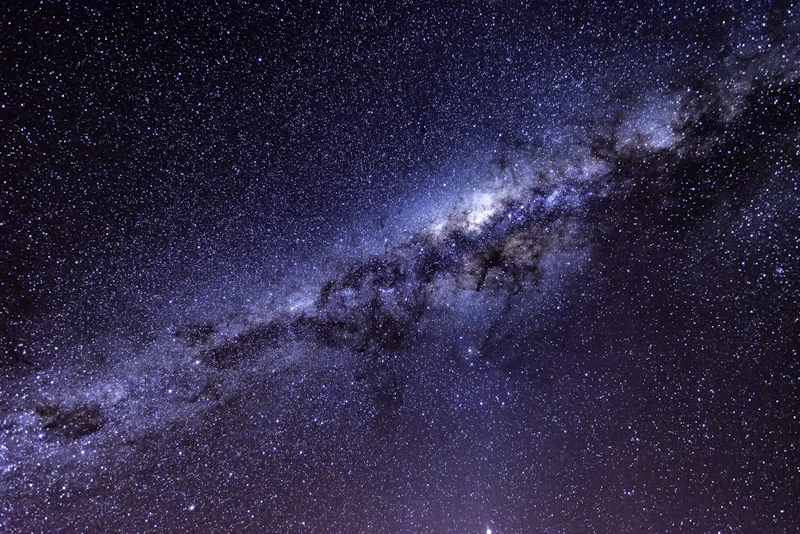
How to Photograph a Meteor Shower: Camera & Phone Settings
Because shooting stars are unpredictable and brief, astrophotography requires continuous long exposures rather than manual timing.
DSLR and Mirrorless Camera Settings
- Lens: Wide-angle focal length (14mm to 24mm full-frame) with a fast aperture (f/1.4 to f/2.8).
- Focus: Manual focus (MF) zoomed in on a bright star until it forms a sharp pinpoint.
- Exposure: Shutter speed between 15 and 25 seconds following the 500 Rule (
500 / Focal Length = Max Seconds). - ISO: ISO 1600 to 3200 depending on light pollution and sensor performance.
- Intervalometer: Use a shutter release cable or interval timer to shoot back-to-back exposures continuously.
Smartphone Astrophotography Tips
- Mount your phone on a steady tripod to eliminate handshake blur.
- Turn on Night Mode or Astrophotography mode (such as Google Pixel Astrophotography mode).
- In manual Pro mode, select ISO 800-1600, Infinity focus (1.0), and 15-30 second exposures.
- Use a 3-second timer or Bluetooth remote clicker to avoid shaking the device when pressing the shutter.
The Ultimate Meteor Shower Field Checklist
✦ What to Pack for Your Stargazing Trip
Frequently Asked Questions (FAQ)
Can you see a meteor shower from inside a city?
Yes, but you will mainly see bright fireballs. In urban areas with heavy light pollution, you may only see 2 to 5 meteors per hour. To improve your odds, find a dark local park or open field away from direct streetlights, facing away from downtown buildings.
Why do meteors display different colors (green, orange, blue)?
A meteor's color depends on the chemical composition of the meteoroid and atmospheric ionization. Nickel and magnesium glow vibrant green or turquoise, sodium burns orange-yellow, iron glows yellow, and ionized atmospheric nitrogen and oxygen glow violet or red. Fast Perseid meteors frequently leave striking green and cyan trails.
What happens if it is cloudy during the peak night?
Major meteor showers remain active for several nights surrounding their peak. The nights directly before and after peak typically yield 50% to 70% of peak hourly rates. If clouds block peak night, head out the following clear evening.
Are meteor showers dangerous to people or satellites?
Meteors pose virtually no risk on the ground because the tiny dust grains disintegrate 50 miles up. Space agencies and satellite operators monitor major showers because high-velocity dust can occasionally erode solar panels or cause electrical anomalies on spacecraft. Explore planetary gravity and orbital mechanics using our Age on Other Planets Calculator to learn how planet mass affects orbital dynamics.
Further Reading & Authoritative Astronomy Resources
To dive deeper into meteor science, real-time fireball reporting, and dark sky preservation, explore these authoritative scientific resources:
- International Meteor Organization (IMO) — Global meteor calendars, live visual observation campaigns, and radio meteor flux data.
- American Meteor Society (AMS) — Comprehensive North American meteor guides, fireball log databases, and observation reporting forms.
- NASA Science: Meteors & Meteorites — In-depth planetary science overviews of asteroid debris streams and sample return missions.
- DarkSky International — Interactive dark sky maps, IDA-certified stargazing locations, and light pollution mitigation research.
Step outside on the next clear night, give your eyes time to adjust, recline comfortably, and enjoy the cosmic show!