Unveiling the Mysteries of the Kuiper Belt: A Realm of Ancient Secrets and Frozen Worlds
Way out past Neptune — where sunlight arrives thin and exhausted, where cold isn't a temperature so much as a condition — that's where the solar system keeps its oldest secrets. The Kuiper Belt gets written off as empty space by people who haven't looked closely enough. It's not empty. It's a deep-freeze archive of icy bodies and primordial rubble that's been sitting out there, perfectly still, since before Earth had oceans. Astronomers have been chasing it for decades. And the closer we get, the weirder and more wonderful it turns out to be. So — let's go. Into the dark, into the cold, into the world of Kuiper Belt Objects. What are these frozen time capsules actually trying to tell us?
What Exactly is a Kuiper Belt Object?
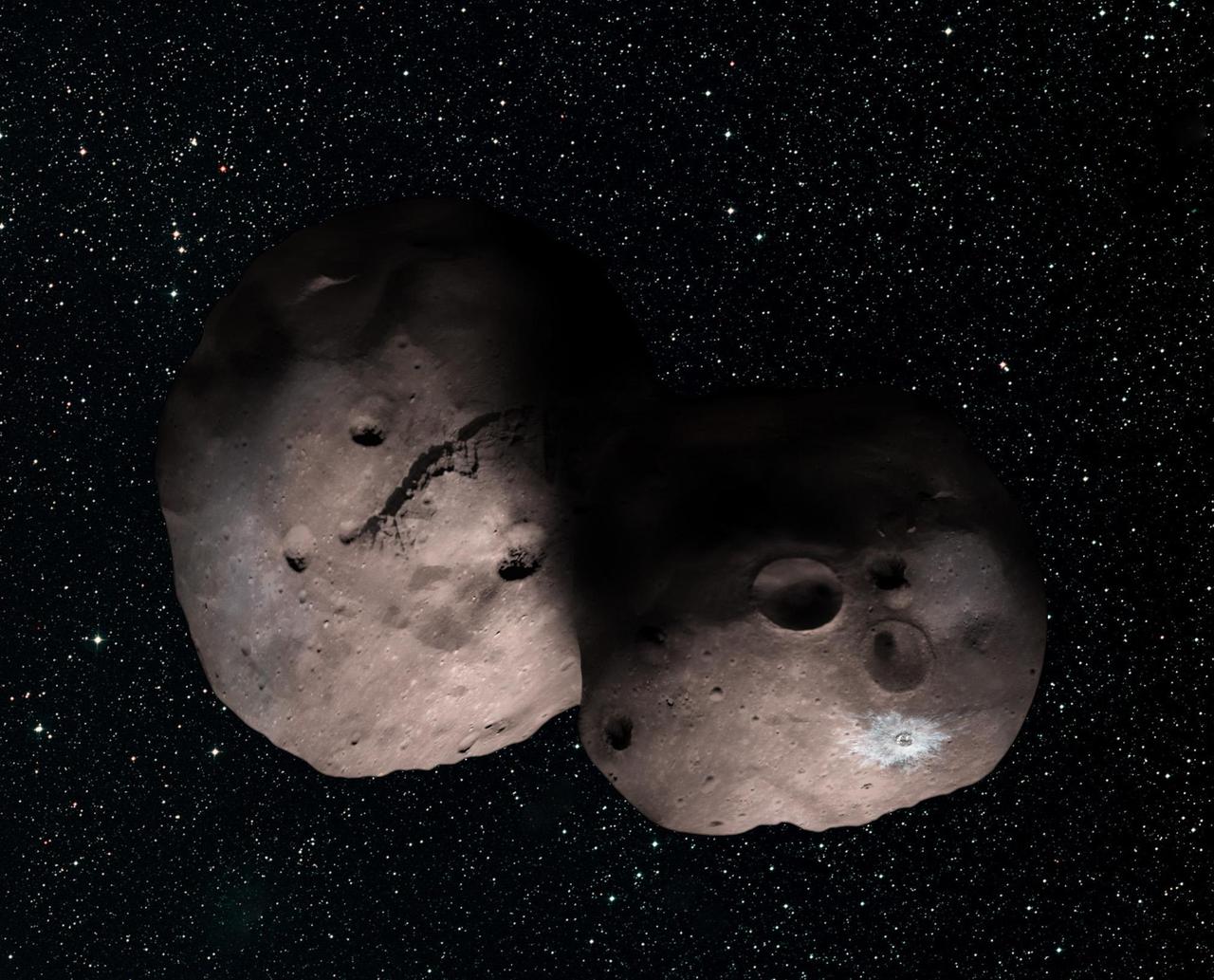
Imagine a vast doughnut of icy rubble encircling the outer edge of our solar system. Kuiper Belt Objects orbit the Sun at enormous distances — roughly 30 to 55 astronomical units (AU) — meaning they sit 30 to 55 times farther from the Sun than we do. And here's the part that never quite stops being strange: these aren't ruins of some destroyed planet. They're the original ingredients — raw material that was always there, never quite swept up into anything bigger. Instead of rock and iron, they're made of frozen water, ammonia, and methane, usually coated in a dark reddish crust of organic compounds that nothing has disturbed in billions of years.
How Do We Classify Them?
KBOs aren't all the same — not remotely. Scientists sort them by the way they move. "Classical KBOs" drift through calm, nearly circular orbits and are about as untouched as anything in the solar system gets — the original packaging, still sealed. Then there are "Resonant KBOs" — Pluto being the most famous — locked into a gravitational rhythm with Neptune, like two dancers who've held the same beat for four billion years and show no sign of stopping. And then the "Scattered KBOs," the restless ones — hurled into wild, stretched orbits by close brushes with the giant planets long, long ago, and still wandering.
Neptune: The Bouncer of the Outer Solar System
The Kuiper Belt isn't a frozen museum. It has a history — slow and enormous — and Neptune wrote most of it. Back when the giant planets were still shuffling into their final positions, in a chaotic planetary migration that reshaped everything, Neptune's gravity tore through the early debris disk like something had gone wrong. Icy bodies got flung in every direction. The architecture of the belt we study today — every gap, every cluster, every strange orbital quirk — was carved out in that upheaval. The scars are still there, written into the paths these objects trace.
The Invisible Gravitational Tether
And Neptune never really let go. Even now, it locks certain KBOs into stable orbital resonances — holding them in place, keeping them out of harm's way, almost protectively. But drift too close to the chaotic zones near Neptune's edges, and the story changes completely. Objects that wander into those regions can get thrown inward, hurtling toward the Sun — eventually blazing into our night sky as short-period comets, spectacular and brief, with no trace of the silent frozen place they came from.
Modern Discoveries and the Next Frontier
What we know about this icy frontier has been rewritten fast, and more than once. In 2015, NASA's New Horizons swept past Pluto and sent back images that genuinely unsettled people — towering ranges of water ice, delicate atmospheric hazes, terrain that had no business looking the way it did on a dwarf planet that far from any warmth. Everything the models predicted turned out to be wrong. That happened over a weekend. Since then, Hubble and the James Webb Space Telescope have kept pushing further, reading the chemical fingerprints of these small, distant worlds one careful observation at a time.
Did You Know? Most short-period comets — the ones that loop around the Sun in under 200 years — trace their origins back to the Kuiper Belt. They come from the "scattered disk," a turbulent outer region where icy bodies get nudged, little by little, toward the inner solar system. Toward warmth and light they've never once encountered.
What's Next for Kuiper Belt Exploration?
We've barely started. When the Vera C. Rubin Observatory comes fully online, it's projected to detect tens of thousands of KBOs we've never seen — objects that have been out there the whole time, hiding in plain sight because nothing powerful enough had ever looked their way. The flood of new data will redraw our map of the outer solar system. Probably more than once.
There's something that gets under your skin about the Kuiper Belt, if you sit with it long enough. It's been out there since before any of this existed — frozen, patient, holding the earliest draft of the solar system's story. The more we build and look and listen, the more it gives back. We're still in the early chapters. Still learning what questions to ask.